

-
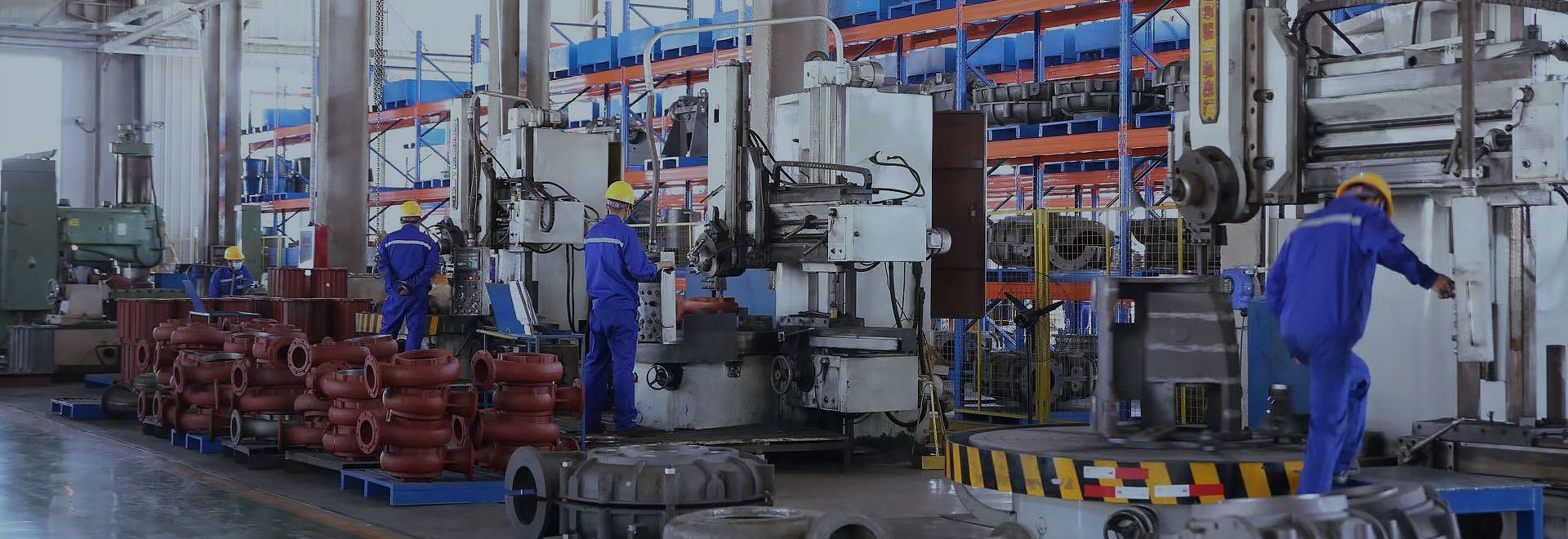
ABOUTThe group company integrates design, casting, production, research and development, sales and service to provide customers with modern, digital one-stop water supply system solutions.

-
PRODUCTS
-
APPLICATION4 production bases in group company, 10 branches, more than 20 offices, more than 1000 professional employees, long-term service to domestic and foreign high-end customer groups including Five state-owned power groups.
-
NEWSShanglishi Group is the main member appointed by the Pump Association to participate in the development of national standards for slurry pumps and petrochemical centrifugal pumps.
-
CONTACTThe company's good product quality and service have always created value for customers, and are favored by more and more customers.
30
2026-10
Six Common Centrifugal Pump Faults, Causes & Troubleshooting Guide
Analyzing the six major pump malfunctions, tracing their root causes, and ensuring stable operation of the pump unit all hinge on selecting the right equipment based on actual operating conditions.
2026-10-30
15
2026-10
Why cannot slurry concentration be ignored in slurry pump selection?
Slurry concentration is a critical factor in selecting a slurry pump, as it, together with particle characteristics, flow rate, head, and pipeline conditions, influences the equipment’s operational performance. Drawing on Shanglishi’s approach to matching operating conditions, this article examines how slurry concentration affects pump selection, helping readers identify the key parameters that must be considered for proper sizing and providing guidance for equipment configuration and reliable conveying.
2026-10-15
10
2026-10
Slurry Pump Performance Testing: What Factory Acceptance Actually Verifies
Slurry pump appearance reflects manufacturing quality, but design compliance requires performance testing. Factory-acceptance tests measure flow rate, head, and power against specifications, though water-only results differ from actual slurry conditions. Parameters are interrelated and must be evaluated together across operating conditions. Standardized factory testing provides objective delivery data and reference for installation and operation, but cannot fully replace on-site acceptance. Performance testing is a critical step in verifying compliance with design and contractual requirements.
2026-10-10
16
2026-09
Why Do Slurry Pumps Use Single-Casing and Double-Casing Designs?
Slurry pumps can be classified, according to their structural design, into single‑casing and double‑casing types, which differ in terms of structural configuration and the arrangement of wetted components. This paper begins with an examination of pump casing structures, briefly outlines the operational characteristics of single‑ and double‑casing designs, and analyzes the key factors that influence casing selection in practical applications, thereby helping readers gain a clearer understanding of the distinctive features and applicable design principles of each casing type.
2026-09-16
04
2026-09
Why is a slurry pump more durable than a regular water pump?
When it comes to industrial pumps, most people picture pumping water. But what if you’re handling not clear water, but a slurry—mixture of mineral debris, coal ash, and sediment? An ordinary pump would wear through in just a few hours. Slurry pumps are specially designed for such “extreme operating conditions.” This article explains, in plain and accessible terms, the fundamental differences between slurry pumps and conventional pumps: why they resist abrasion and clogging, and why mines, power plants, and river‑dredging operations all rely on them. By the end, you’ll see that this isn’t just a pump—it’s an entire “wear‑resistant system with replaceable components.”
2026-09-04
22
2025-04
What Do You Need to Know About Centrifugal Pumps?
Centrifugal pumps are widely used in a variety of industrial applications due to their simple design, reliability, and ability to handle large volumes of liquid efficiently.
2025-04-22
10
2025-04
Centrifugal slurry pumps are critical components in mineral processing facilities, distinguished from traditional pumps by their unique features. This post explores these distinctions and the design principles behind slurry pumps.
2025-04-10
21
2025-03
Functions and Types of Impellers
The impeller's function is to directly transfer the mechanical energy of the prime mover to the liquid, increasing the liquid's static pressure energy and kinetic energy (mainly increasing static pressure energy). Worman slurry pump impellers are mainly made of high-chromium alloy materials, natural rubber, A49 material, polyurethane material, Cr30 material, etc. The main pumps include AH series slurry pumps, G-type gravel pumps, and AHR rubber slurry pump impellers.
2025-03-21
10
2025-03
Differences Between Vertical and Horizontal Multistage Pumps
Multistage pumps are essential components in various industrial applications, designed to transport fluids at higher pressures than single-stage pumps. They achieve this by utilizing multiple impellers, or stages, each contributing to the overall pressure increase.
2025-03-10
27
2025-02
Self-Priming vs. Non-Self-Priming Pumps: Which Is Right for You?
When choosing a pump for your industrial, commercial, or residential needs, one of the critical decisions is whether to use a self-priming or non-self-priming pump. The right choice depends on the specific application, the type of fluid being pumped, and the installation setup.
2025-02-27
SHANGLISHI PUMP GROUP
Department Director: Ms. Wang
Tel: +86-311-82725629
Email: admin@sls-pump.com
WhatsApp: +86 15830676372
Mobile Website

Mobile Website
Copyright © 2022 SHANGLISHI PUMP GROUP
Service