

-
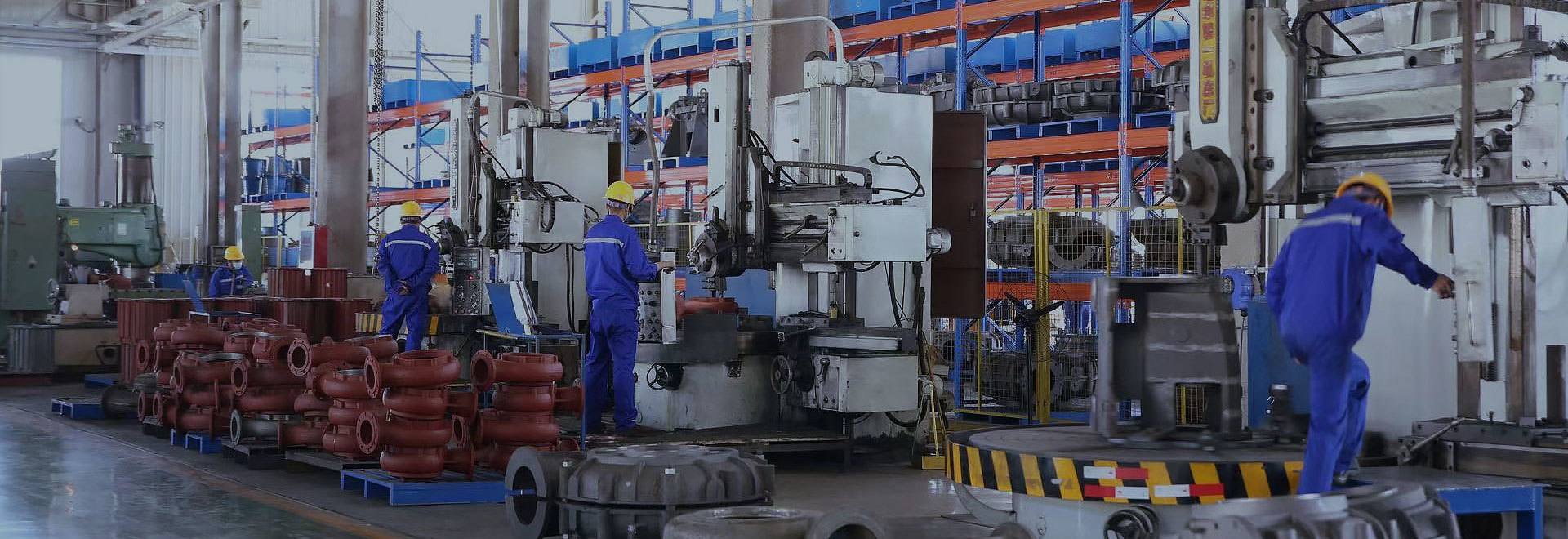
ABOUTThe group company integrates design, casting, production, research and development, sales and service to provide customers with modern, digital one-stop water supply system solutions.

-
PRODUCTS
-
APPLICATION4 production bases in group company, 10 branches, more than 20 offices, more than 1000 professional employees, long-term service to domestic and foreign high-end customer groups including Five state-owned power groups.
-
NEWSShanglishi Group is the main member appointed by the Pump Association to participate in the development of national standards for slurry pumps and petrochemical centrifugal pumps.
-
CONTACTThe company's good product quality and service have always created value for customers, and are favored by more and more customers.
What is Slurry pump?
Published:
Dec 12,2024
Slurry is one of the most difficult fluids to handle. It is highly abrasive, viscous, sometimes corrosive, and contains a high concentration of solids. Undoubtedly, transporting mud is challenging for pumps. However, choosing the right pump for these materials can have significant long-term beneficial effects.
"What is slurry?"
Slurry is any mixture of fluid and fine solid particles., for example: cement, starch, or coal suspended in water. Slurry is a convenient way to handle solids in mining, steel processing, casting, power generation, and more recently, hydraulic fracturing sand extraction.
Slurry typically relies on gravity to flow like viscous fluids, but it can also be pumped as needed. Slurry is mainly divided into two categories: non-settling or settling.
Non-settling slurries consist of very fine particles that create the illusion of increased viscosity. These slurries usually have low wear characteristics, but careful consideration is needed when selecting the right pump, as their behavior differs from that of ordinary liquids.
Settlingslurries are formed by coarse particles that often create unstable mixtures. Special attention should be paid to flow rate and power calculations when selecting a pump. Most slurry applications consist of coarse particles, thus exhibiting higher wear performance.
Slurries share the following common characteristics.
- Abrasive
- Thick consistency
- May contain a large amount of solids
- Usually settles downquickly
- Requires more power to run than a “water” pump
Slurry pump selection
Many types of pumps that can be used to pump mud, but the most commonslurry pump type is the centrifugal pump.Centrifugal slurry pumps use centrifugal force generated by a rotating impeller ro Impart kinetic energy to the slurry,similar to how water-like liquids are moved through standard centrifugal pumps.
Slurry applications significantly shorten the expected wear life of pumping components.Its crucial to shoose pumps designed specificially for these heavy-duty applications from the outset.Consider the followings points when making your selection.
Basic pump components
To ensure the pump can withstand wear,the size of the impeller must be correctly selected/designed ,structural materials, and discharge configuration.
Open impellers are most common in slurry pumps because they are least likely to clog. On the other hand, closed impellers are most prone to clogging and are also the hardest to clean once clogged.
Slurry impellers are large and thick. This helps them operate longer in harsh slurry mixtures.
Slurry pump structure
Slurry pumps are usually larger in size and typically require more horsepower to operate than low-viscosity liquid pumps due to lower efficiency. Bearings and shafts must also be more robust and durable.
To protect the pump casing from wear, slurry pumps are often lined with metal or rubber.
Metal casings are made of carbide. These casings can withstand increased pressure and erosion caused by circulation.
The choice of casing should meet application requirements. For example, pumps used in cement production handle fine particles at low pressure. Therefore, a lightweight casing structure is acceptable. If the pump handles slurries, the casing and impeller will need to be thicker and more robust.
Slurry pumping considerations
Those with experience in slurry pumping know that it is not an easy task. Slurries are heavy and difficult to pump. They can cause excessive wear on the pump and its components, and if the moving speed is not fast enough, they can clog the intake and discharge lines.
Keeping the slurry pump in reasonable use for a sustained period can be a challenge. However, you can take some measures to extendthe lifespan of the slurry pump and make pumping mud less difficult.Find the optimal position to run the pump as slowly as possible (to reduce wear), but fast enough to prevent solids from settling and clogging the pipeline.Minimize the discharge pressure of the pump to reduce wear.
- Find the best position to make the pump run as slowly as possible (to reduce wear) but fast enough to prevent solids from settling and clogging the line
- Reduce the pump discharge pressure to the lowest possible point in order to reduce wear
- Follow proper piping principles to ensure consistent and uniform delivery of the slurry to the pump
Keyword:
Slurry Pump,What is a slurry pump?,Operation of slurry pumps
Recommended
SHANGLISHI PUMP GROUP
Department Director: Ms. Wang
Tel: +86-311-82725800/82725629
Email: admin@sls-pump.com
WhatsApp: +86 15830676372
Mobile Website

Mobile Website
Copyright © 2022 SHANGLISHI PUMP GROUP